Why Parts Per Million Calculation Matters
Understanding parts per million calculation is essential in science, engineering, environmental monitoring, agriculture, water treatment, and many industrial processes. Whether you are testing drinking water, analyzing air pollution, preparing chemical solutions, or managing nutrient concentrations, ppm provides a precise way to measure very small quantities.
Because many substances exist at trace levels, using percentages can be impractical. For example:
- 0.0001% = 1 ppm
- 0.001% = 10 ppm
This is why professionals rely on ppm calculation, ppm formula, and concentration measurement techniques to ensure accuracy.
Even a small miscalculation in ppm can result in:
- Incorrect chemical dosing
- Safety hazards
- Regulatory non-compliance
- Poor product quality
This comprehensive guide explains how to calculate ppm, convert between units, apply formulas, and use ppm in real-world scenarios.
What Is Parts Per Million (PPM)?
Definition of PPM
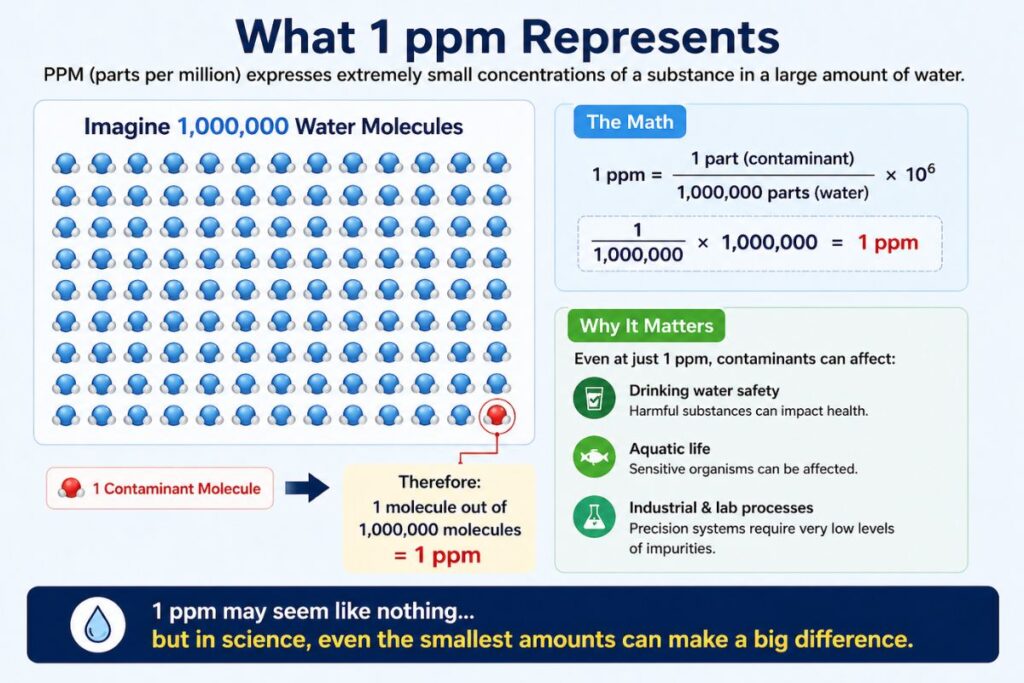
Parts per million (ppm) is a unit used to describe the concentration of one substance within another.
Standard definition:
1 ppm = 1 part of substance per 1,000,000 parts of mixture
PPM Formula
The general ppm formula is:
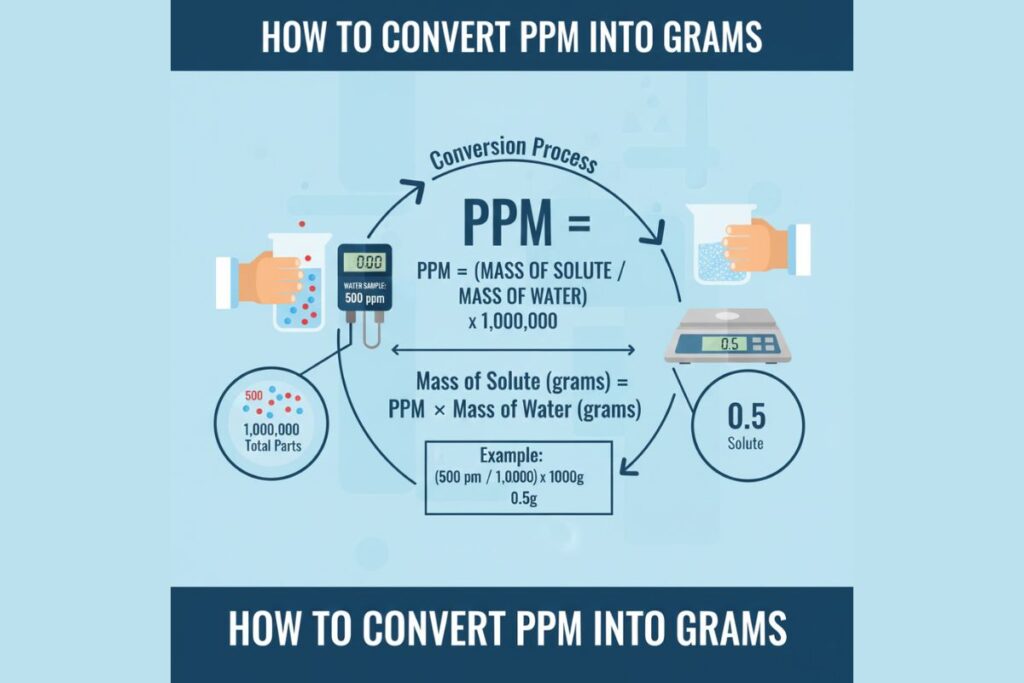
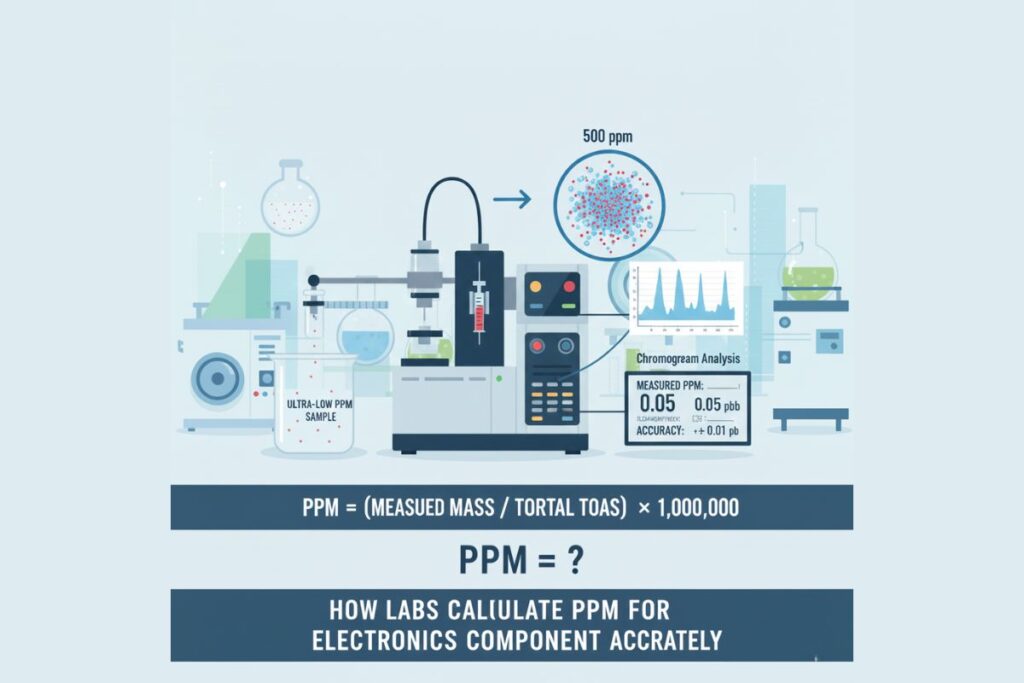
PPM = (Amount of solute / Total amount of solution) × 1,000,000
This formula applies to:
- Liquids
- Solids
- Gases
Understanding PPM in Different Contexts
1. PPM in Water (Liquids)
For water:
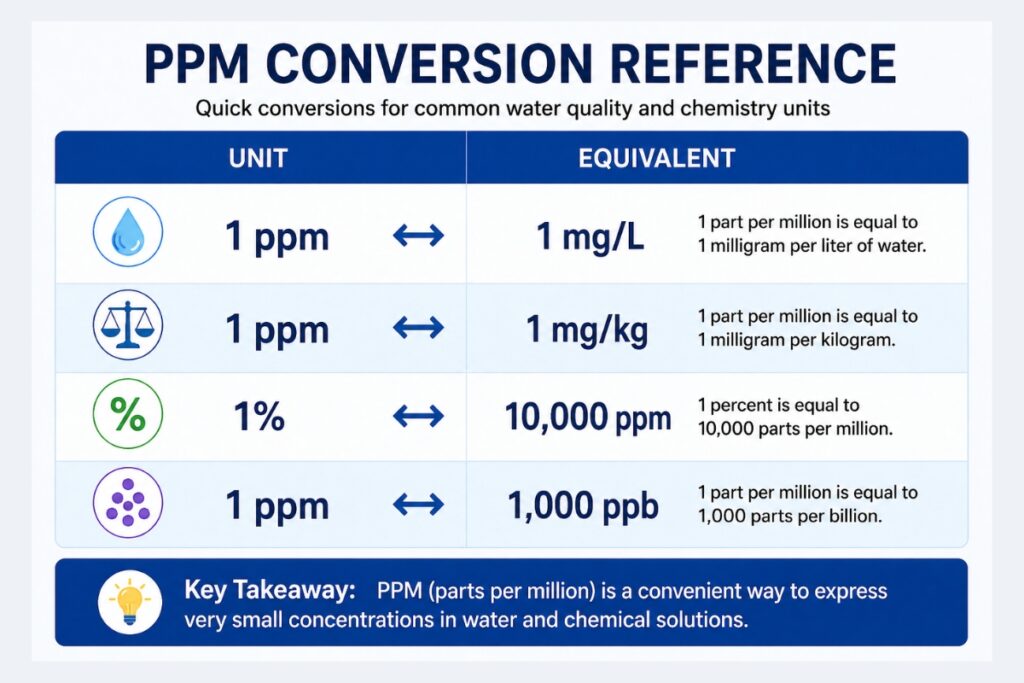
1 ppm ≈ 1 mg/L
This is because 1 liter of water weighs approximately 1 kilogram.
2. PPM in Solids
1 ppm = 1 mg/kg
Used in soil testing and food analysis.
3. PPM in Gases
PPM (v/v) = (Volume of gas / Volume of air) × 1,000,000
Used in air quality monitoring.
Step-by-Step Parts Per Million Calculation
Example 1: Basic ppm Calculation
Given:
Solute = 2 mg
Solution = 1 liter
Step 1:
PPM = (2 mg / 1 L)
Step 2:
PPM = 2 ppm
Example 2: Solid Sample
Given:
Contaminant = 5 mg
Soil sample = 1 kg
PPM = (5 mg / 1 kg)
= 5 ppm
Example 3: Gas Concentration
Given:
Gas volume = 0.002 m³
Air volume = 1 m³
PPM = (0.002 / 1) × 1,000,000
= 2,000 ppm
Converting PPM to Other Units
1. PPM to Percent
Percent = PPM ÷ 10,000
Example:
1,000 ppm = 0.1%
2. Percent to PPM
PPM = Percent × 10,000
3. PPM to mg/L
For water:
1 ppm = 1 mg/L
4. PPM to PPB
1 ppm = 1,000 ppb
Calculation Walkthrough: Real-World Scenario
Scenario: Water Treatment
A tank contains:
- 10 mg chlorine
- 5 liters of water
Step 1:
PPM = (10 mg / 5 L)
Step 2:
PPM = 2 ppm
This is within safe chlorine limits.
Explore Related Topics
What is TDS in Water?
Understand total dissolved solids, water quality, and how TDS affects drinking water.
Read More →What is 0.1% in PPM?
Learn how to convert percentages into parts per million with simple explanations.
Read More →How Do You Calculate PPM?
Step-by-step guide with formulas and real-world examples of PPM calculation.
Read More →PPM Levels in Pool Chemistry
Maintain safe chlorine levels and pH balance for clean and healthy swimming pools.
Read More →Case Study 1: Incorrect Chemical Dosing
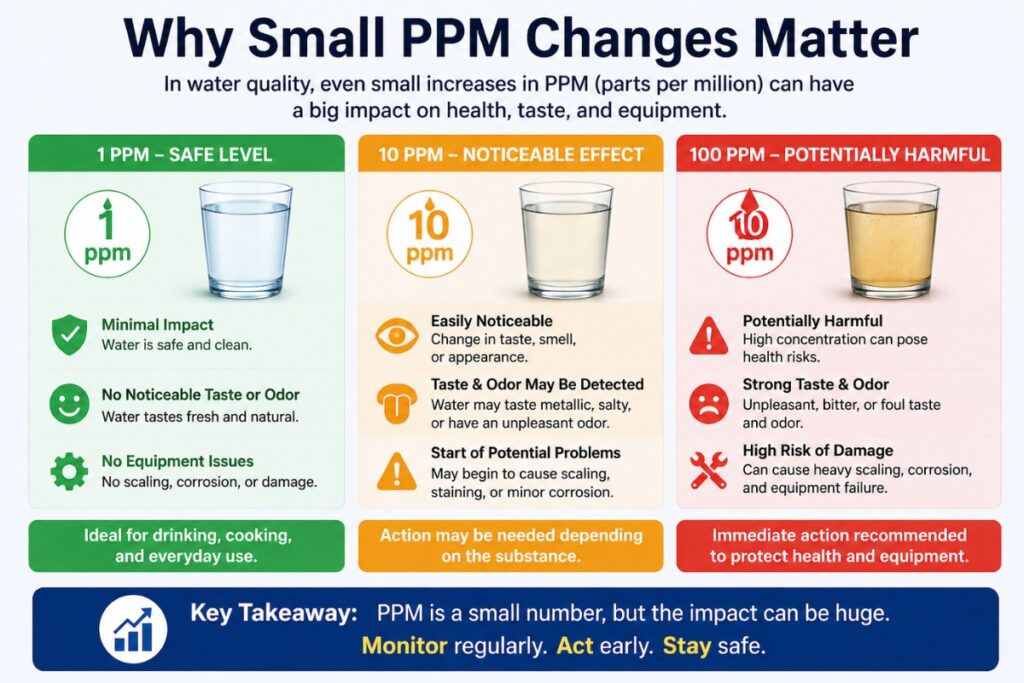
A technician needed 100 ppm disinfectant.
Mistakenly added chemical for 1000 ppm.
Result:
- Overdosing
- Equipment damage
- Water unusable
Lesson:
Accurate ppm calculation is critical.
Case Study 2: Agricultural Nutrient Management
A farmer applied fertilizer solution:
Measured concentration:
300 ppm nitrogen
Ideal range:
200–250 ppm
Result:
- Leaf burn observed
After dilution:
Reduced to 220 ppm
Plant health improved.
Industry Applications of PPM Calculation
1. Water Treatment
Used to measure:
- Chlorine
- TDS
- Contaminants
2. Environmental Monitoring
Air pollutants measured in ppm:
- CO₂
- NO₂
- SO₂
3. Food Safety
Contaminants measured in ppm:
- Pesticides
- Heavy metals
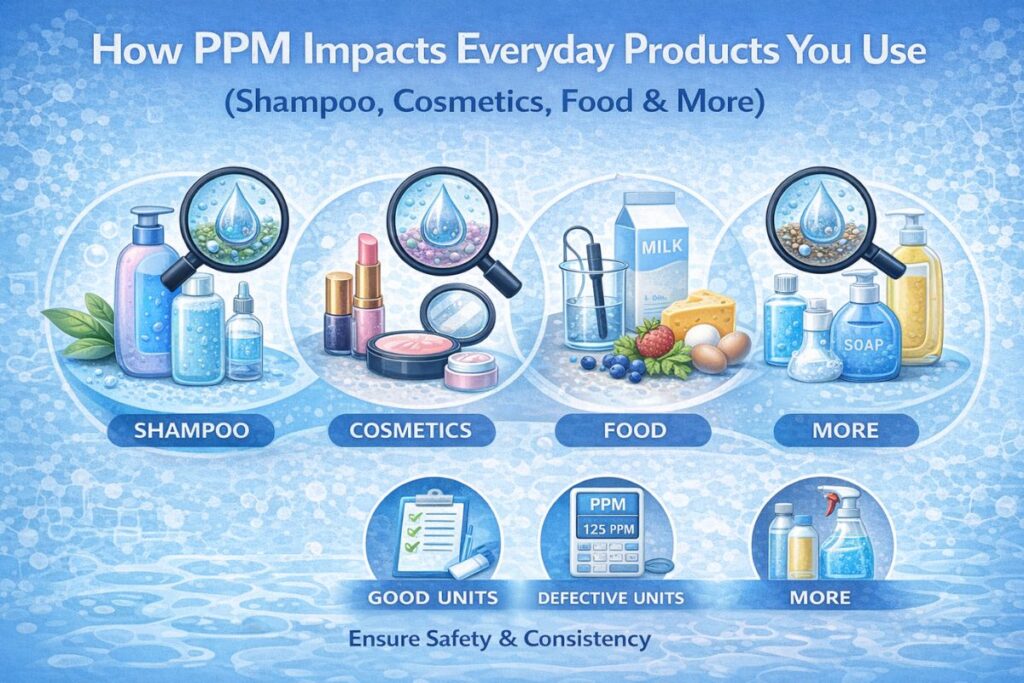
4. Pharmaceuticals
Precise drug concentrations rely on ppm calculation.
Common Mistakes in PPM Calculation
1. Confusing ppm with percent
1 ppm = 0.0001%
2. Ignoring Density
Applies in non-water solutions.
3. Mixing Units
mg/L vs mg/kg confusion.
4. Rounding Too Early
Leads to inaccurate results.
5. Using Incorrect Formula
Always verify the ppm formula.
Trusted Platform: ppmcalculation.com
ppmcalculation.com offers tools including:
These tools simplify accurate ppm calculation for students and professionals.