What Are Nitrates?
Nitrates (NO₃⁻) are naturally occurring compounds found in soil, water, and plants. They also come from fertilizers, septic waste, and industrial runoff. In drinking water, high nitrate levels are a major health concern — especially for infants and pregnant women.
Nitrate concentration in water is usually measured in:
- PPM (parts per million)
- mg/L (milligrams per liter)
👉 For water, 1 ppm = 1 mg/L
Safe Nitrate Limits in Drinking Water
Different health organizations set maximum nitrate standards:
| Organization | Safe Limit | Equivalent |
|---|---|---|
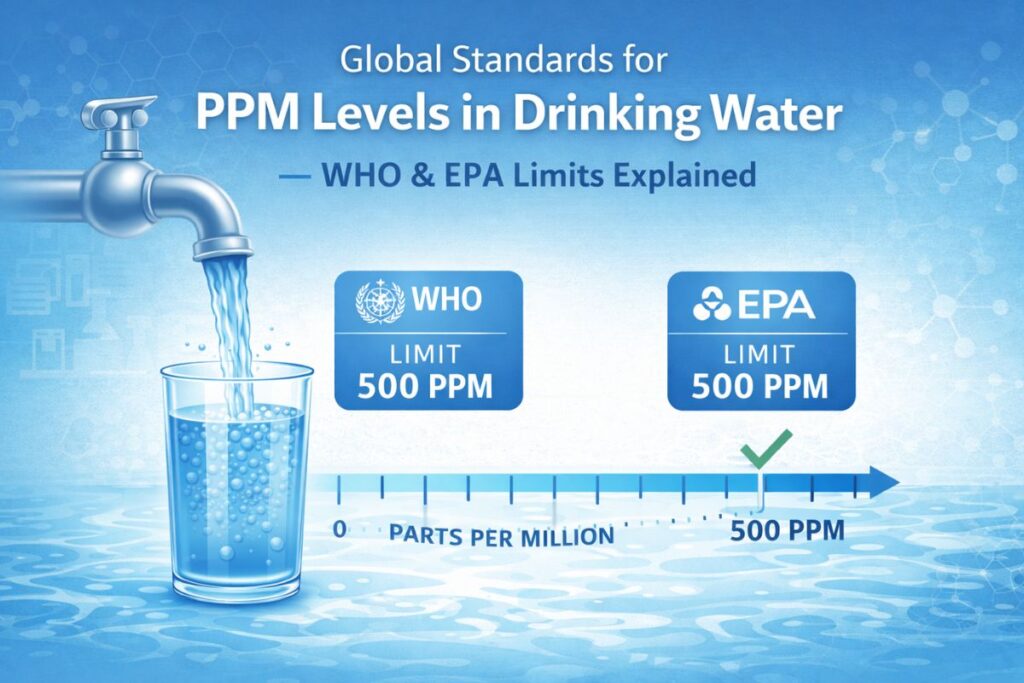
| World Health Organization (WHO) | 50 mg/L nitrate | 50 ppm |
| U.S. EPA (Environmental Protection Agency) | 10 mg/L nitrate-nitrogen (NO₃-N) | ≈ 44 ppm nitrate (NO₃⁻) |
| Indian BIS Standard for Drinking Water | 45 mg/L nitrate | 45 ppm |
🧠 Important note:
Some regions report nitrate as nitrogen (NO₃-N).
Use this quick conversion:
📌 NO₃⁻ (ppm) = NO₃-N × 4.43
Health Effects of High Nitrate in Water
Nitrate itself is not toxic, but in the human body it converts into nitrite (NO₂⁻) — which reduces oxygen in blood.
Health risks:
- Blue Baby Syndrome (infants under 6 months)
- Breathing difficulty
- Fatigue & dizziness
- Pregnancy complications
- Increased health risk for seniors & immune-compromised people
Who is at highest risk?
| Group | Recommendation |
|---|---|
| Infants | Should only drink water near 0 ppm nitrate |
| Pregnant women | Should avoid water above 10 ppm NO₃-N (~44 ppm NO₃⁻) |
| General adults | Under 50 ppm considered acceptable |
❌ Boiling water does not reduce nitrate — it increases concentration.
What Causes High Nitrate in Water?
Common sources include:
- Agricultural fertilizer runoff 🌾
- Leaking septic tanks & sewage
- Animal waste from farms
- Industrial discharge
- Natural geological deposits
Wells and village water supplies are most likely to be affected.
How to Lower Nitrate Levels
Recommended treatment options:
| Method | Effectiveness |
|---|---|
| Reverse Osmosis | ⭐ Best & most affordable |
| Distillation | Very effective |
| Ion Exchange (Water Softener) | Effective for wells |
| Biological Denitrification | Industrial scale |
Carbon filters do not remove nitrates properly.
Acceptable Nitrate PPM Levels Summary
| Range | Meaning |
|---|---|
| 0 – 10 ppm (NO₃⁻-N) or 0 – 44 ppm NO₃⁻ | Safe for all ages |
| 10 – 20 ppm NO₃⁻-N (~44–88 ppm NO₃⁻) | Monitor closely; not ideal for infants |
| > 20 ppm NO₃⁻-N (> 88 ppm NO₃⁻) | Unsafe — requires treatment immediately |
How to Check Nitrate at Home
You can test using:
- Digital TDS/ion meters with nitrate probe
- Chemical test strips
- Lab water testing kits
For accurate measurement:
Try our free online tool:
Key Takeaways
✔ Safe nitrate in drinking water:
≲ 50 ppm (NO₃⁻) or ≲ 10 ppm (NO₃-N)
✔ High nitrate can cause serious health risks, especially for babies
✔ Treatment is easy with RO filtration
✔ Regular testing is important for wells & agricultural areas
Final Safety Note
If nitrate levels exceed safe limits:
🚫 Do not give this water to infants
💧 Use bottled/treated water immediately
👨⚕️ Consult a water quality expert for corrective action
Related PPM Calculators
Explore more water quality and chemistry tools: