Drinking water quality is essential for human health, and one of the most widely used measurements to ensure safety is PPM, which stands for Parts Per Million. PPM indicates how many particles of a particular substance are present in one million parts of water. It helps experts determine whether the content of dissolved solids, minerals, or contaminants is safe for consumption. Understanding safe PPM levels helps households, water treatment facilities, and industries ensure water meets quality and health standards.
What Does PPM Mean in Drinking Water
PPM measures the concentration of substances dissolved in water, including minerals, chemicals, salts, metals, and other impurities. Since water is a universal solvent, it naturally collects particles from soil, pipes, and human activities. A safe PPM range ensures these dissolved substances remain within acceptable limits so that drinking water does not harm the body or cause long-term health issues. PPM helps evaluate both beneficial minerals and harmful contaminants.
Why Safe PPM Levels Matter for Human Health
The human body needs clean drinking water to function properly. Excessive contaminants can lead to several health problems, including stomach disorders, chronic diseases, and developmental issues in children. Contaminants like lead, fluoride, chlorine, ammonia, nitrates, and heavy metals must stay below regulated PPM limits set by water safety authorities. Regular measurement helps ensure that both municipal and private water sources remain safe.
Safe PPM Levels for TDS in Drinking Water
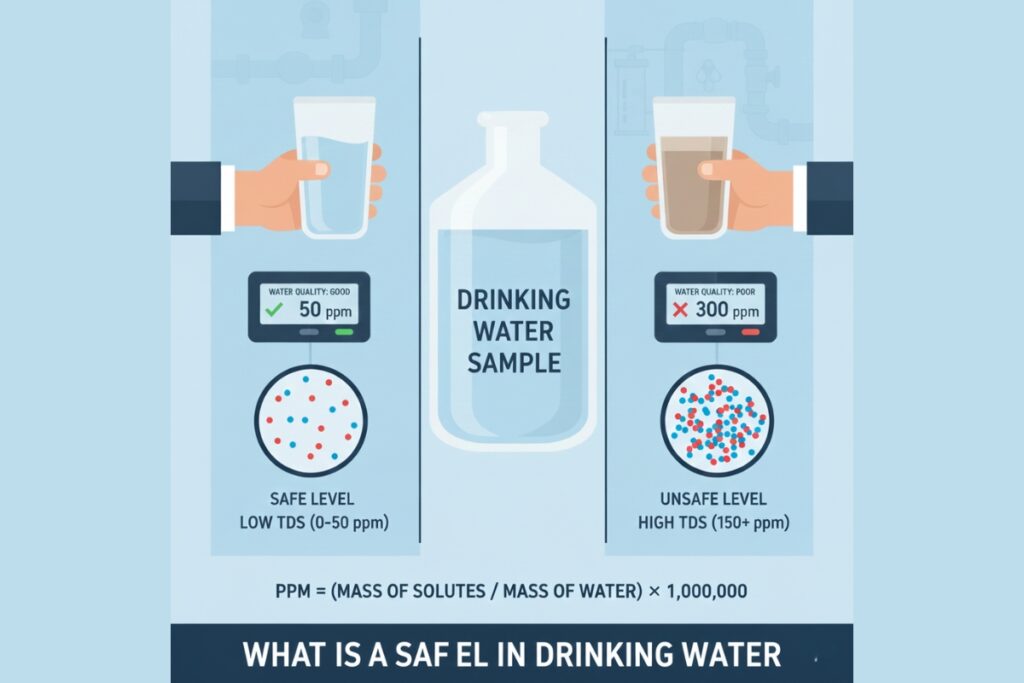
TDS stands for Total Dissolved Solids and represents everything that is dissolved in water. It is the most common way to check overall safety using PPM. TDS includes minerals like calcium and magnesium, salts, and trace contaminants. The general guideline for TDS in drinking water is:
TDS Level and Water Quality:
Less than 50 PPM: Very low mineral content, water may taste flat and not ideal for long-term drinking
50 to 150 PPM: Excellent quality drinking water
150 to 300 PPM: Good quality with acceptable mineral balance
300 to 500 PPM: Fair quality, generally safe for drinking
500 to 1000 PPM: Not recommended for regular consumption
Above 1000 PPM: Unsafe for drinking
Water treatment systems like RO (reverse osmosis) filters are often used to reduce high TDS levels.
Safe PPM Limits for Common Drinking Water Contaminants
Different contaminants have their own safe PPM thresholds. Here are important ones monitored in household water:
Chlorine
Chlorine is used for disinfection, but too much can cause health issues.
Safe level: Less than 4 PPM
Fluoride
Fluoride supports dental strength but can cause fluorosis in excess.
Safe level: About 0.7 PPM in treated water
Nitrates
Nitrates usually come from fertilizers and sewage, dangerous for infants.
Safe level: Less than 10 PPM
Iron
Excess iron affects taste, color, and can stain surfaces.
Safe level: Less than 0.3 PPM
Lead
Lead is extremely harmful, especially for children’s brain development.
Safe level: Should be 0 PPM, maximum allowable limit 0.015 PPM
Ammonia
Often comes from industrial waste or chloramine treatment.
Safe level: Less than 0.5 PPM
Manganese
Too much causes neurological disorders and discoloration.
Safe level: Less than 0.05 PPM
These values help consumers understand whether their water source requires filtration or treatment.
How Water Quality Authorities Regulate Safe PPM
Organizations such as WHO and national water quality boards set maximum contaminant limits. Water suppliers test water regularly to ensure levels remain within safety limits. For private well owners, it is recommended to conduct water testing at least once per year to check changes in PPM levels of harmful substances.
How to Measure PPM Levels at Home
Homeowners can easily check TDS and some contaminant levels using simple tools:
TDS meter: Measures dissolved solids quickly in PPM
Water testing strips: Indicate chlorine, nitrates, iron, hardness
At-home chemical testing kits: More detailed results for contaminants
Lab testing: Most accurate, recommended when contamination is suspected
Monitoring helps identify if water filtration or treatment is necessary.
When High PPM Levels Are a Problem
High PPM levels may indicate:
Water hardness causing scaling in pipes and appliances
Potential presence of harmful chemicals or heavy metals
Taste, odor, and aesthetic issues making water unpleasant
Corrosion of household plumbing leading to contamination from pipes
Health risks due to chronic exposure to harmful impurities
Immediate treatment is necessary if harmful contaminants exceed their safe levels.
How to Reduce High PPM Levels in Drinking Water
There are multiple purification methods depending on the type of contaminant:
Reverse Osmosis (RO): Best for reducing TDS, heavy metals, and salts
Activated Carbon Filtration: Removes chlorine, organic compounds, odor
Water Softeners: Target hardness-causing minerals like calcium and magnesium
Distillation: Removes most impurities by evaporation and condensation
UV Purification: Eliminates bacteria and viruses (not PPM-based)
Selecting the right filtration solution ensures safe and pleasant drinking water.
What If PPM Levels Are Too Low
Extremely low PPM means water lacks essential minerals like calcium and magnesium. This can lead to mineral deficiencies and slow hydration efficiency. Some RO systems add mineral cartridges to restore healthy mineral levels. Balanced PPM improves both health benefits and water taste.
Environmental and Source Factors Affecting PPM Levels
PPM levels can change depending on:
Groundwater composition
Industrial and agricultural waste
Old or corroded pipelines
Seasonal changes in rainfall and water table
Urban pollution and chemical runoff
Understanding the origin of water helps identify and prevent contamination at the source.
Should You Regularly Monitor PPM Levels
Frequent monitoring is recommended especially for:
Homes using well water
Areas with heavy industry or farming nearby
Buildings with old plumbing systems
Families with infants, elderly, or sensitive individuals
Home filtration systems that require maintenance checks
Tracking trends over time helps detect contamination early.
Conclusion
Safe PPM levels in drinking water ensure good health, pleasant taste, and protection against long-term health risks. Understanding TDS ranges and individual contaminant limits helps consumers make informed decisions about their water sources. Measuring PPM levels regularly and using proper purification technologies keeps water safer for daily use. Balanced mineral content within the recommended PPM range is essential for clean, healthy, and refreshing drinking water.