The Role of PPM in Hydroponics and Agriculture
Modern agriculture increasingly relies on precision nutrient management. Whether growing vegetables in soil, operating a greenhouse, or maintaining a hydroponic farm, understanding PPM in Hydroponics and Agriculture is essential for maximizing plant health and crop yield.
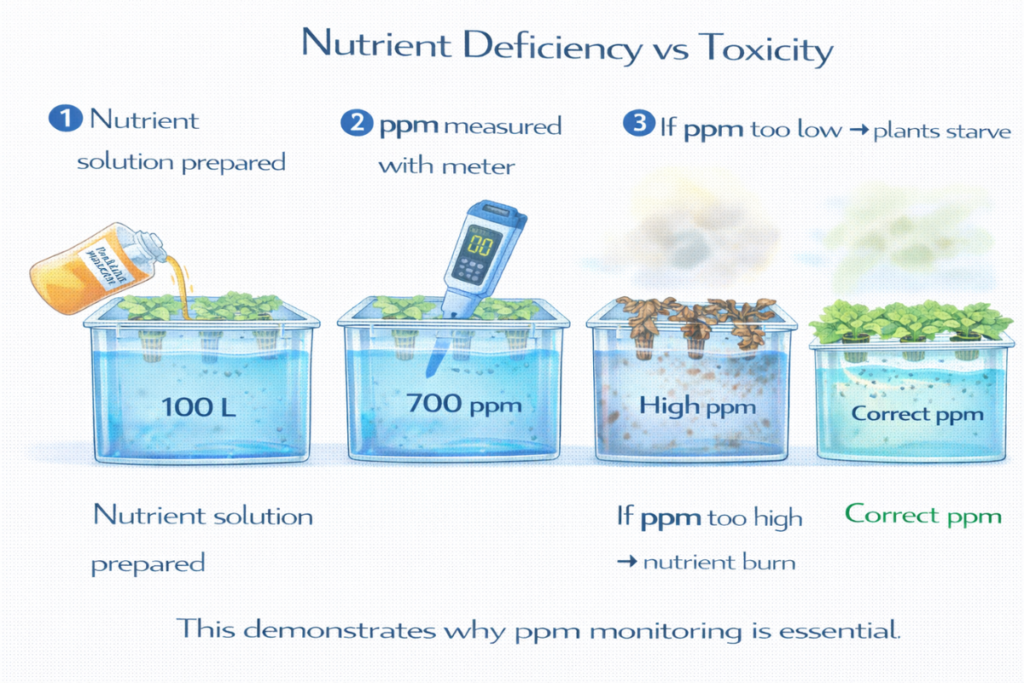
Plants require nutrients such as nitrogen, phosphorus, potassium, calcium, and magnesium in carefully balanced concentrations. If these nutrients are too low, plants suffer deficiencies. If they are too high, roots may burn or nutrient toxicity may occur.
Farmers and hydroponic growers measure these nutrients in parts per million (ppm) to maintain the ideal concentration in irrigation water or hydroponic solutions.
A small difference in ppm—such as 800 ppm versus 1,200 ppm—can determine whether a plant thrives or struggles.
Understanding ppm values helps growers:
- Optimize nutrient delivery
- Prevent fertilizer waste
- Improve crop yield
- Reduce environmental runoff
- Maintain plant health
This guide explains how ppm works in agriculture and hydroponics, how to calculate nutrient concentrations, and how growers use ppm monitoring to manage plant nutrition.
What Is PPM in Hydroponics and Agriculture?
Definition of PPM in Nutrient Solutions
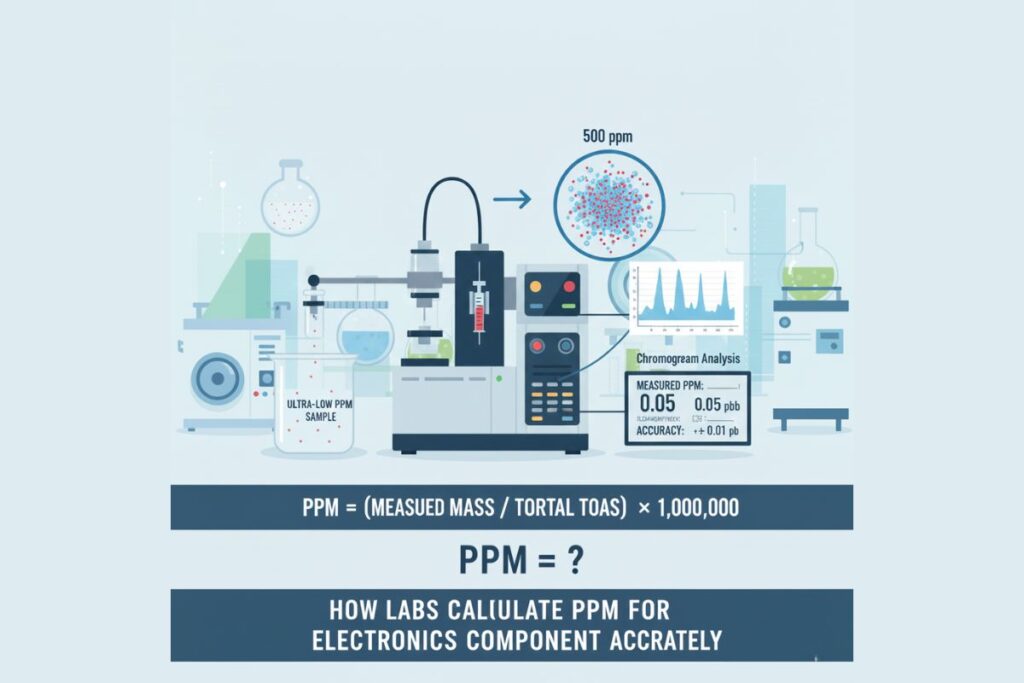
In agricultural chemistry, parts per million (ppm) represents the mass of a dissolved nutrient relative to the total mass of water.
Standard ppm formula:
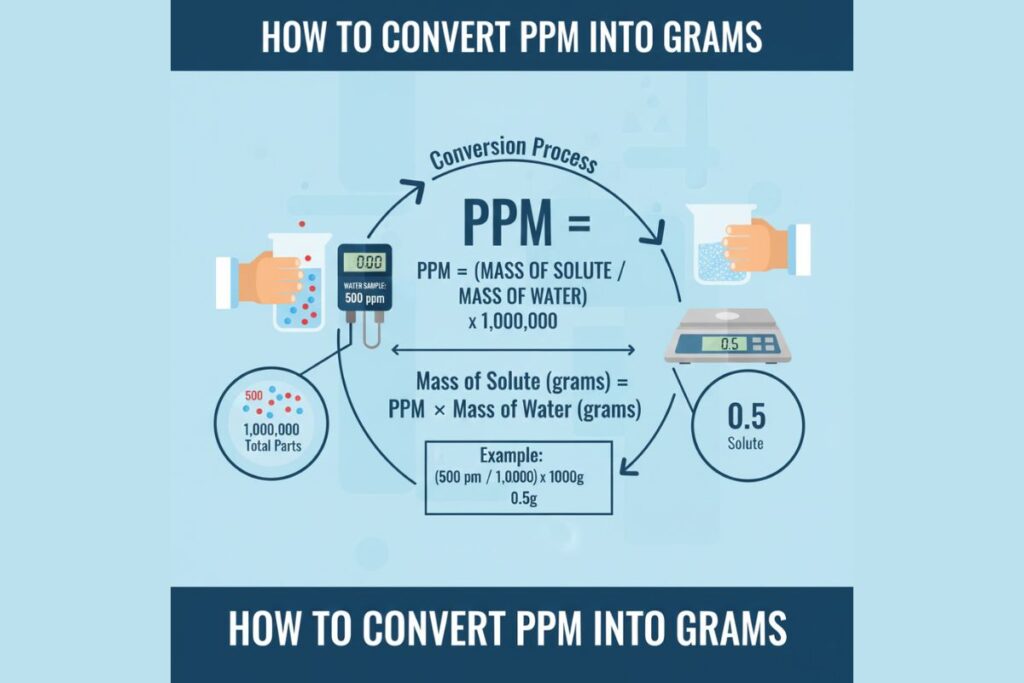
PPM = (Mass of nutrient / Mass of solution) × 1,000,000
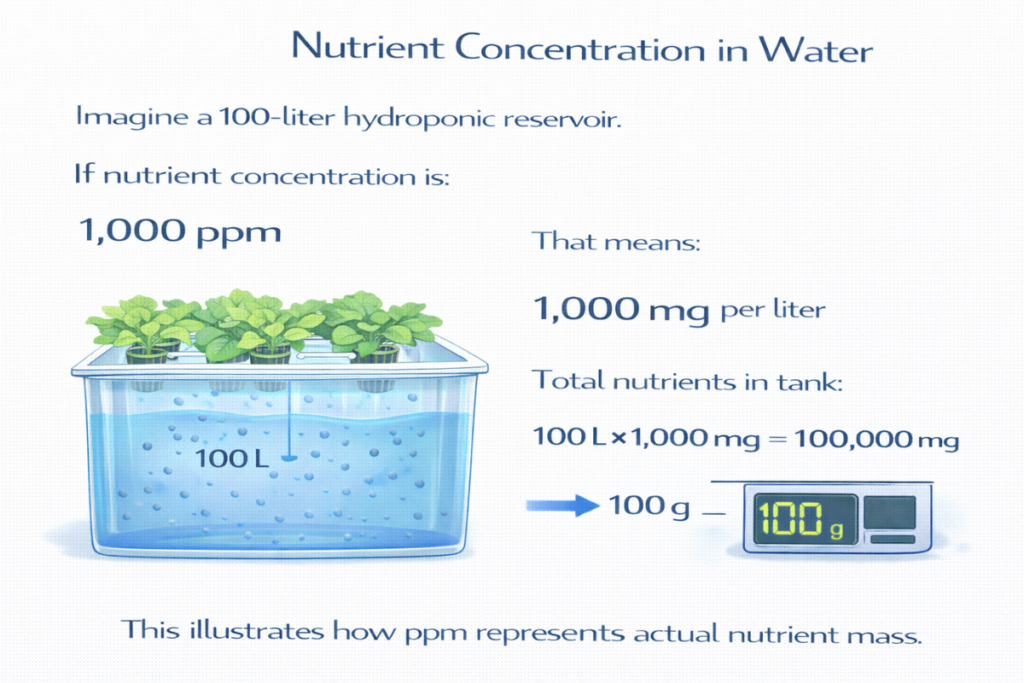
In hydroponic systems where water density is close to 1 kg/L:
1 ppm ≈ 1 mg/L
This relationship simplifies ppm calculation for nutrient solutions.
Why PPM Matters for Plant Growth
Plants absorb nutrients dissolved in water through their roots. If the concentration is incorrect, plant metabolism is affected.
Key plant nutrients measured in ppm:
- Nitrogen (N)
- Phosphorus (P)
- Potassium (K)
- Calcium (Ca)
- Magnesium (Mg)
- Iron (Fe)
Each nutrient has a specific ppm range required for healthy plant development.
Typical Nutrient PPM Levels in Hydroponics
Different crops require different nutrient concentrations.
| Crop Type | Ideal PPM Range |
|---|---|
| Lettuce | 560–840 ppm |
| Tomatoes | 1,400–3,500 ppm |
| Strawberries | 1,200–1,600 ppm |
| Herbs | 700–1,200 ppm |
| Cucumbers | 1,800–2,200 ppm |
Maintaining these ranges helps ensure balanced plant nutrition.
Measuring PPM in Hydroponic Systems
Growers use TDS (Total Dissolved Solids) meters or EC (Electrical Conductivity) meters.
These devices estimate ppm by measuring electrical conductivity of the nutrient solution.
Higher dissolved salts → higher conductivity → higher ppm reading.
Relationship Between EC and PPM
EC meters often convert readings into ppm using conversion factors.
| EC (mS/cm) | Approx PPM |
|---|---|
| 1.0 | 500–700 ppm |
| 1.5 | 750–1,050 ppm |
| 2.0 | 1,000–1,400 ppm |
The exact conversion depends on meter calibration.
Calculation Walkthrough: Preparing a Hydroponic Nutrient Solution
Scenario
You want to prepare a nutrient solution with:
1,200 ppm nitrogen
Tank size:
200 liters
Step 1: Convert ppm to mg/L
1,200 ppm = 1,200 mg/L
Step 2: Calculate total nitrogen needed
1,200 mg × 200 L = 240,000 mg
Step 3: Convert to grams
240,000 mg = 240 g
So the system requires 240 grams of nitrogen source.
Case Study 1: Hydroponic Lettuce Production
A hydroponic farm noticed slow lettuce growth.
Measured nutrient solution:
350 ppm
Ideal range:
560–840 ppm
Solution:
Nutrient concentration increased to 700 ppm.
Result:
- Faster leaf growth
- Higher yield per cycle
Proper ppm management improved productivity.
Case Study 2: Tomato Nutrient Burn
A greenhouse tomato grower reported leaf tip burn.
PPM measurement showed:
3,800 ppm
Ideal range:
1,400–3,500 ppm
Action taken:
- Diluted nutrient solution with fresh water
- Reduced ppm to 2,500
Plant recovery observed within one week.
Industry Example: Commercial Hydroponic Greenhouses
Large-scale hydroponic farms rely on automated nutrient dosing systems.
These systems continuously monitor:
- EC
- ppm
- pH
Automated adjustments maintain optimal nutrient concentrations.
Such precision agriculture improves water efficiency and crop yield.
Comparison Table: Low vs High Nutrient PPM Effects
| Nutrient Level | Plant Impact |
|---|---|
| Too Low | Nutrient deficiency |
| Optimal Range | Healthy growth |
| Too High | Root damage and toxicity |
Monitoring ppm prevents both extremes.
How to Manage PPM in Hydroponic Nutrient Solutions
Growers control nutrient levels by:
✔ Monitoring ppm daily
✔ Adjusting fertilizer concentration
✔ Diluting solutions with fresh water
✔ Replacing nutrient reservoirs regularly
✔ Using automated nutrient dosing systems
These practices maintain stable nutrient availability.
Soil Agriculture vs Hydroponics: PPM Management
| Factor | Soil Farming | Hydroponics |
|---|---|---|
| Nutrient Control | Limited | Precise |
| Monitoring | Occasional | Continuous |
| Nutrient Availability | Variable | Direct |
| Yield Efficiency | Moderate | High |
Hydroponics relies heavily on ppm monitoring.
Common Mistakes in Agricultural PPM Management
1. Confusing EC with PPM
EC measures conductivity, not concentration directly.
2. Ignoring Crop-Specific Nutrient Needs
Different plants require different ppm ranges.
3. Not Calibrating TDS Meters
Calibration ensures accurate concentration measurement.
4. Overfeeding Plants
Too much fertilizer causes nutrient toxicity.
5. Ignoring Water Quality
Source water minerals contribute to baseline ppm.
Tools & Calculators for Nutrient Concentration Management
Accurate calculations improve agricultural precision.
Trusted Platform: ppmcalculation.com
ppmcalculation.com provides tools for growers and researchers including:
Advantages
- Accurate ppm formula implementation
- Instant calculation
- Mobile-friendly design
- No registration
- Suitable for students and professionals
Frequently Asked Questions (FAQs)
1. What is ideal ppm for hydroponic plants?
It depends on the crop, typically between 600 and 2,500 ppm.
2. How often should ppm be checked?
Most hydroponic systems check ppm daily.
3. Can high ppm damage plants?
Yes, excessive nutrients cause root burn and toxicity.
4. What is the difference between EC and ppm?
EC measures electrical conductivity; ppm estimates dissolved solids.
5. Why does ppm change over time?
Plants absorb nutrients and water, altering solution concentration.
6. Can ppm affect crop yield?
Yes. Proper nutrient levels improve growth and productivity.
Why PPM in Hydroponics and Agriculture Is Essential
Understanding PPM in Hydroponics and Agriculture allows growers to precisely control nutrient concentrations and maintain optimal plant health.
PPM monitoring helps farmers:
✔ Deliver balanced plant nutrition
✔ Prevent fertilizer waste
✔ Improve crop productivity
✔ Maintain consistent plant growth
✔ Optimize hydroponic systems
Accurate ppm calculation and reliable concentration measurement tools enable modern precision agriculture.
Optimize your nutrient management with reliable ppm tools.
👉 Visit ppmcalculation.com to access:
Related PPM Calculators
Explore more water quality and chemistry tools: