PPM, or Parts Per Million, is a standard unit used to express very low concentrations of a substance in another material. It is commonly applied in chemistry, water quality testing, food safety, environmental science, and industrial quality control. However, many real-world applications require converting PPM into grams for preparing solutions, calculating contamination levels, or measuring chemical content in experiments. Understanding how to convert PPM into grams accurately ensures reliable results, correct formulation, and compliance with safety standards. This article explains what PPM means and how to convert PPM to grams in various situations.
What Does PPM Mean in Practical Terms
PPM shows how many parts of a substance exist in one million parts of a mixture. It is essentially a ratio or fraction.
1 PPM means:
1 part of solute in 1,000,000 parts of solution
This can also be written as:
1 mg of solute per 1 liter of water
1 mg of solute per 1 kg of a solid mixture
Because the numbers involved are small, PPM helps represent trace amounts clearly. When converting PPM into grams, we need to understand the physical state of the material and the units involved.
Key Concept: Relationship Between PPM, Milligrams, and Grams
To convert PPM into grams, remember the following useful equivalences:
1 PPM = 1 mg per liter of water
1 PPM = 1 mg per kg of a solid sample
1 mg = 0.001 grams
These relationships allow us to switch between PPM and grams by determining the total mass or volume of the material.
General Conversion Formula:
Grams of solute = (PPM value × Total mass or volume of sample) ÷ 1,000,000
This formula applies to solids, liquids, and solutions as long as the unit measurement of the main sample is correctly used.
Converting PPM to Grams in Water Solutions
Water density is considered 1 kg per liter, making calculations simple. If we have water volume in liters and know the desired PPM concentration:
Grams = (PPM × Volume of water in liters) ÷ 1,000,000 × 1000
Simplified:
Grams = (PPM × Volume in liters) ÷ 1000
Example:
How many grams are needed to make 2 liters of a 50 PPM chlorine solution?
Grams = (50 × 2) ÷ 1000 = 0.1 grams
Therefore, 0.1 grams of chlorine is needed.
Converting PPM to Grams in Solid Samples
When dealing with solids, mass replaces volume in the formula. Use the weight in kilograms.
Grams = (PPM × Weight of sample in kg) ÷ 1000
Example:
A soil sample weighs 5 kg and contains lead at 200 PPM. How many grams of lead are present?
Grams = (200 × 5) ÷ 1000 = 1 gram
This means one gram of lead exists in the soil.
Converting PPM into Grams for Large-Scale Calculations
Industries like environment management, mining, agriculture, and water treatment frequently calculate grams of contamination or additives across huge masses of material. Converting PPM allows professionals to estimate pollutant loads, treatment chemical requirements, and product specifications.
Example:
A water reservoir holds 500,000 liters of water with iron concentration at 2 PPM. How much iron is dissolved?
Grams = (2 × 500,000) ÷ 1000 = 1000 grams
1000 grams = 1 kilogram
So the reservoir contains 1 kg of dissolved iron.
This helps in determining filtration needs for water treatment.
Why Converting PPM into Grams is Essential
Many industries require conversion into grams to ensure:
Accurate chemical dosing in treatment systems
Compliance with environmental regulations
Safe agricultural nutrient applications
Monitoring harmful pollutants in drinking water
Quality control in manufacturing and processing
Understanding physical quantities helps scientists and engineers avoid under-treatment or overdosing issues.
Conversion Based on Molecular Weight
In chemical reactions, PPM sometimes needs conversion based on molecular weight to calculate moles for chemical equations. Although PPM directly converts into mass, further calculations are required when preparing standard solutions for laboratory analysis.
Example:
100 PPM of sodium chloride in 1 liter water equals:
Mass = 100 mg = 0.1 grams
If needed for reaction calculations:
Moles = mass ÷ molar mass
This ensures precise stoichiometric results in experiments.
Importance of Sample State and Density
PPM conversion accuracy depends on understanding sample density. Water density is standard, but other liquids and solids vary. For example:
Oils have lower density than water
Metals and minerals have much higher density
Industrial chemicals may be denser or lighter depending on formulation
Before converting PPM into grams for chemicals other than water, density must be confirmed to avoid scaling errors.
Quick Reference Conversion Table
Here is a helpful reference for water solutions:
PPM in 1 liter of water = grams needed:
1 PPM = 0.001 g
10 PPM = 0.01 g
50 PPM = 0.05 g
100 PPM = 0.1 g
500 PPM = 0.5 g
1000 PPM = 1 g
This table supports fast calculations during laboratory preparation or industrial dosing.
Field Uses of PPM to Gram Conversion
This conversion is used across numerous fields:
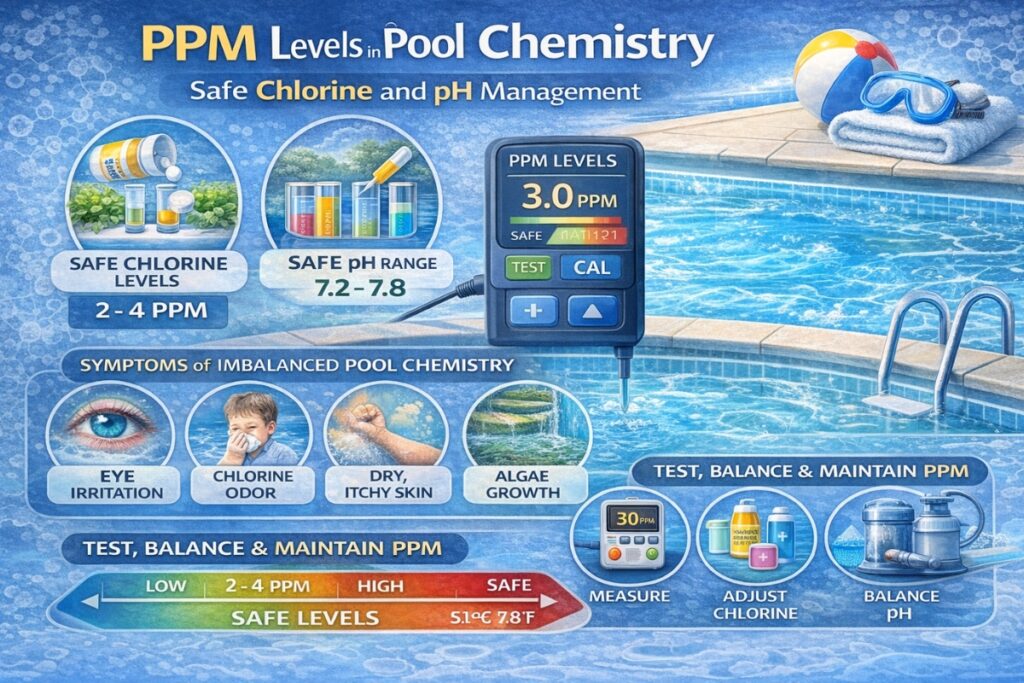
Water quality testing detecting harmful contaminants
Aquaculture where mineral levels impact animal health
Agriculture nutrient application in irrigation
Hydroponics balancing nutrient PPM in growing solutions
Environmental monitoring to track pollution spread
Mining analysis identifying valuable metal concentrations
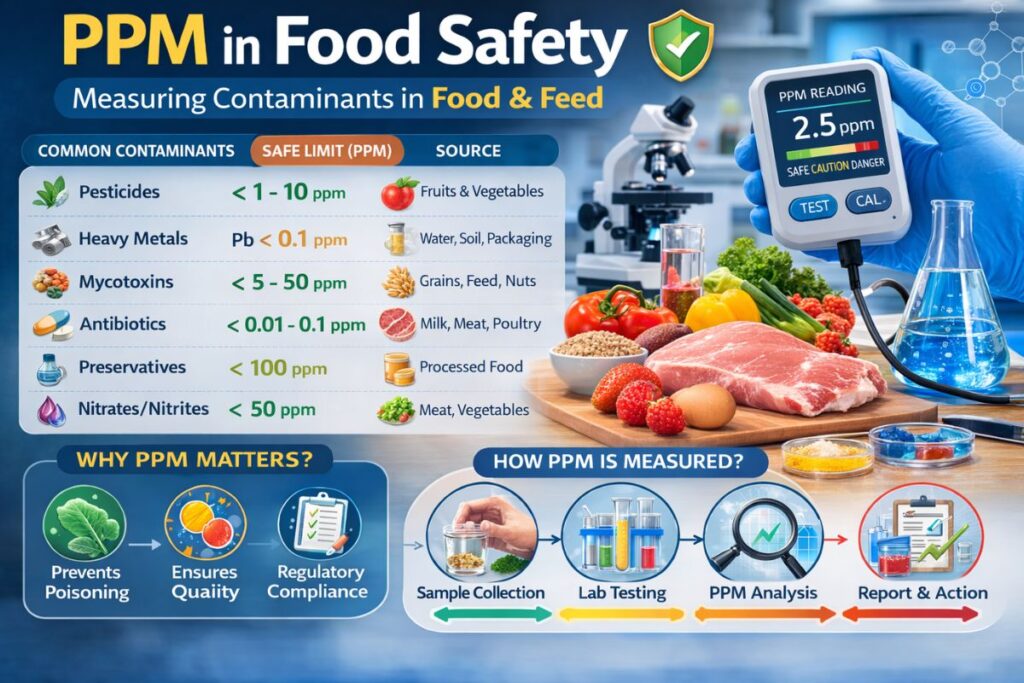
Food processing ensuring safe additive limits
Each of these applications depends on adjusting the concentration of chemicals with precision.
Common Mistakes When Converting PPM to Grams
Some frequent errors must be avoided:
Confusing mg with grams, leading to incorrect mass
Ignoring density differences in non-water fluids
Misreading volume units (milliliters vs liters)
Using impure solutes affecting final concentration
Not using volumetric equipment while measuring water
Careful measurement and correct conversion prevent chemical mismanagement or health hazards.
Summary: Best Practice Conversion Steps
To convert PPM to grams accurately:
Step 1: Confirm if the sample is measured in liters or kilograms
Step 2: Use the correct conversion formula
Step 3: Consider density for non-water liquids
Step 4: Measure solute and solvent precisely
Step 5: Recheck math to avoid dosing errors
Following these steps provides reliability in scientific and industrial applications.
Conclusion
PPM is an essential unit for measuring small quantities of substances in water, soil, food, and industrial products. Converting PPM into grams is necessary when preparing solutions, calculating pollutant loads, or ensuring proper chemical dosing. By understanding the mathematical relationship between mass, volume, and concentration, professionals can correctly determine how many grams of solute correspond to a given PPM level. Accurate conversion supports health safety, quality control, and scientific precision in a wide range of practical applications.