Chlorine is one of the most widely used disinfectants in drinking water treatment, swimming pools, industrial water systems, and sanitation applications. Maintaining chlorine concentration within the correct range is essential for ensuring safe water that is free from harmful bacteria, viruses, and parasites. Parts Per Million, or PPM, is the standard unit used to measure the amount of chlorine dissolved in water. Knowing how to calculate chlorine PPM accurately helps homeowners, water plant operators, pool technicians, and laboratory professionals ensure effective disinfection without exceeding recommended limits. This article explains how to calculate the PPM of chlorine in a volume of water using different methods and formulas.
What Does Chlorine PPM Represent in Water
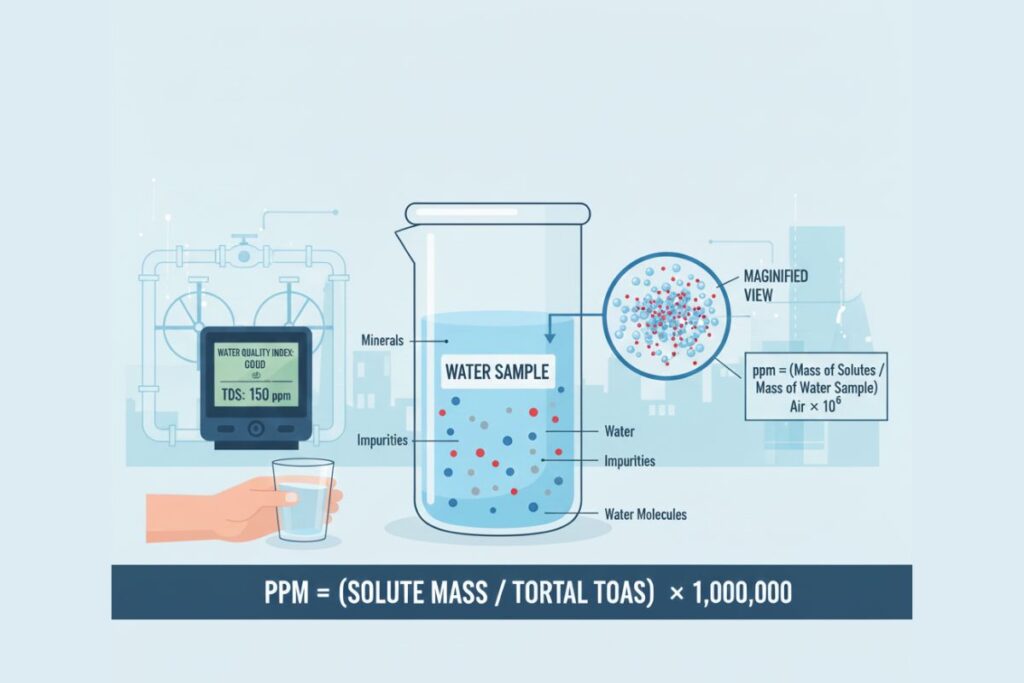
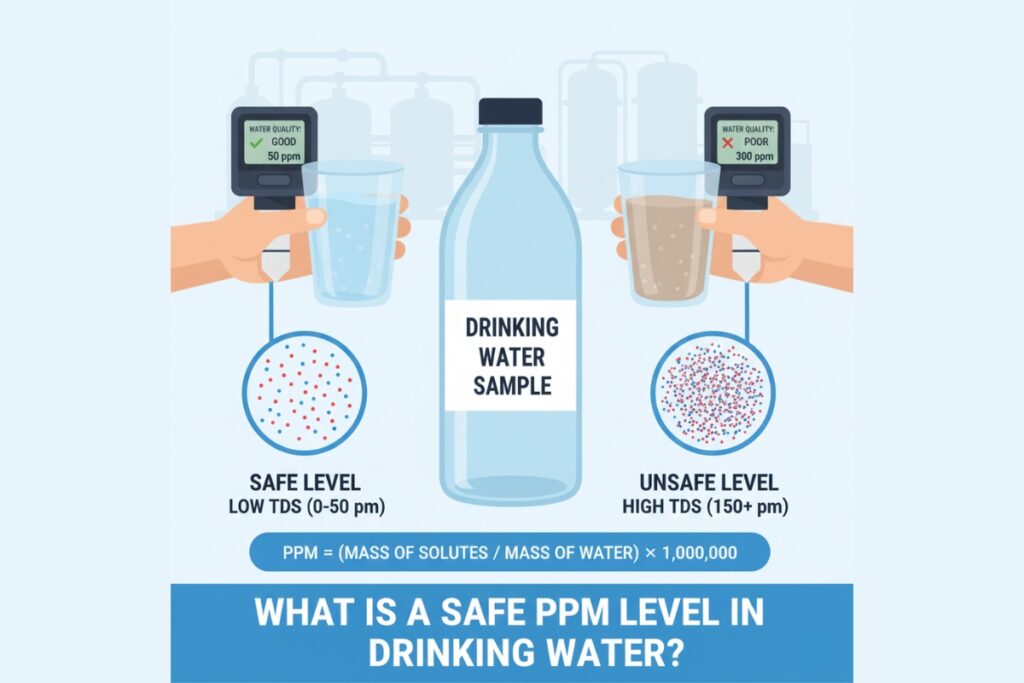
PPM stands for Parts Per Million, which represents how many parts of chlorine are present in one million parts of water. It is a precise unit used for dilute chemical concentrations. Chlorine PPM is essential because water needs enough chlorine to kill pathogens, but not too much to cause irritation or harmful health effects.
General definition:
1 PPM of chlorine = 1 milligram of chlorine per liter of water
This makes chlorine PPM easy to calculate when the volume of water is known. Since water density is close to 1kg per liter, PPM calculations are straightforward.
Why Chlorine PPM Must Be Calculated
Chlorine dosage affects water safety and comfort. Too little chlorine allows microorganisms to survive, while excessive chlorine can damage skin, eyes, and household plumbing. Systems that must monitor chlorine levels include:
Drinking water distribution networks
Swimming pools and spa systems
Cooling towers and industrial pipelines
Food production rinse and wash systems
Hospital surface and equipment disinfection routines
Calculated chlorine levels help comply with safety standards and reduce chemical waste.
Safe PPM Levels for Chlorine
Recommended ranges depend on water use and regulations:
Drinking water systems: Less than 4 PPM
Residential swimming pools: 1 to 3 PPM
Commercial pools: 3 to 5 PPM
Industrial disinfection: Varies depending on process requirements
Calculating PPM helps water operators stay within these guidelines for safe usage.
Formula to Calculate Chlorine PPM in Water
The basic formula for determining chlorine PPM is:
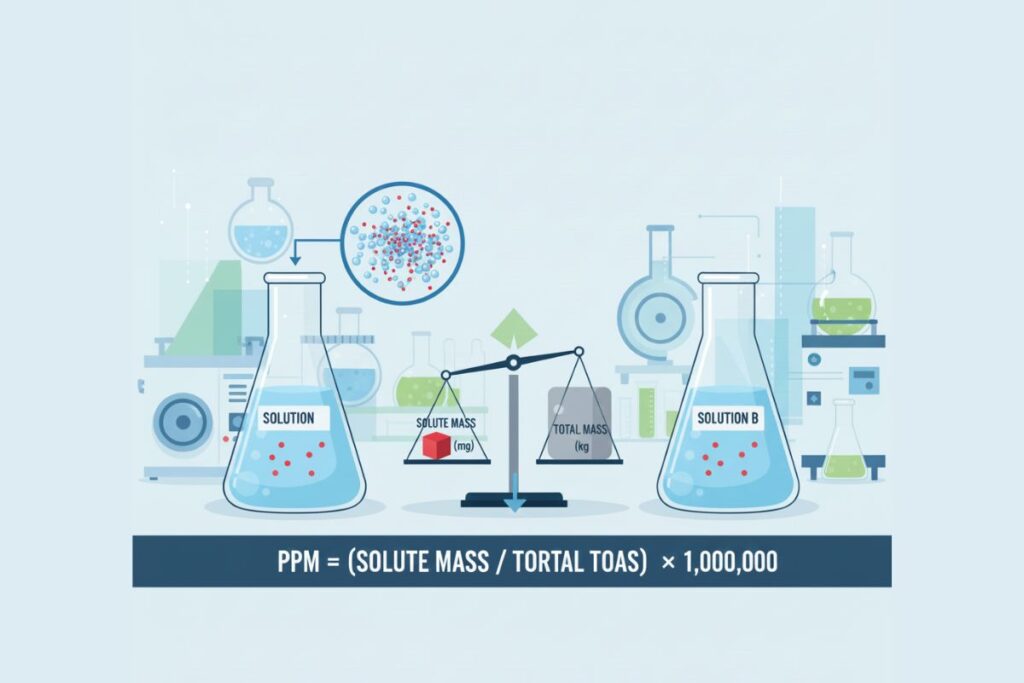
PPM = (Amount of chlorine in mg) ÷ (Volume of water in liters)
Because 1 mg per liter equals 1 PPM, this formula is the foundation for all chlorine concentration calculations.
If chlorine is measured in grams, convert to milligrams before calculation:
1 gram = 1000 milligrams
Example:
If 2 grams of chlorine are added to 1000 liters of water:
PPM = (2000 mg) ÷ (1000 L) = 2 PPM
This means the chlorine concentration in the water is 2 PPM.
Calculating Chlorine PPM from Liquid Chlorine or Bleach
Bleach is often used in pools, wells, and sanitation systems. Liquid chlorine solutions have different percentages of sodium hypochlorite (NaOCl). Common household bleach may contain 5 to 8 percent available chlorine.
To calculate PPM from liquid chlorine:
Step 1: Identify available chlorine concentration (%)
Step 2: Multiply the bleach amount by available chlorine content
Step 3: Convert resulting chlorine mass into milligrams
Step 4: Divide by total water volume in liters
Example:
Adding 50 ml of 8 percent chlorine solution into 1000 liters of water:
Available chlorine = 50 ml × 0.08 = 4 ml chlorine equivalent (assume density close to water)
4 ml ≈ 4 g = 4000 mg
PPM = 4000 mg ÷ 1000 L = 4 PPM
This gives a safe level for drinking water disinfection.
Calculating Chlorine PPM in Swimming Pools
Swimming pool measurements are larger but follow the same logic. Pool volume must first be converted into liters.
Common conversion:
1 cubic meter of water = 1000 liters
1 gallon of water = 3.785 liters
Example:
A pool with 50,000 liters requires a chlorine level of 3 PPM.
Total chlorine needed =
PPM × liters ÷ 1000
= 3 × 50,000 ÷ 1000
= 150 grams
This helps determine how much chlorine product must be added for proper sanitation.
Measuring Chlorine PPM in Water Samples
Sometimes chlorine is already present in the water, and the goal is to calculate rather than dose it. Test methods include:
Colorimetric test strips
DPD chemical comparator tests
Digital chlorine meter or sensor reading
These tools provide a chlorine concentration value in PPM. To confirm the value or calculate chlorine mass in larger systems:
Chlorine mass in mg = PPM × Volume of water in liters
Example:
A treated tank holds 100,000 liters of water with chlorine at 1.5 PPM.
Chlorine mass = 1.5 × 100,000 = 150,000 mg = 150 grams
This data supports water safety monitoring and compliance reporting.
Effects of Source Conditions on Chlorine PPM Accuracy
Multiple factors can influence calculated results:
Water temperature affects chlorine stability
Organic material consumes chlorine and reduces active PPM
Sunlight breaks down chlorine through UV exposure
pH changes affect disinfection efficiency
Pipe corrosion may reduce chlorine strength
Chlorine dosing might require adjustments after testing to maintain ideal PPM levels.
When High or Low PPM Levels Become Problematic
If testing indicates an incorrect PPM, specific issues may occur:
Low PPM effects:
Microbial growth, odor, discoloration, biofilm slime risk
High PPM effects:
Eye and skin irritation, taste issues, corrosion of plumbing systems
Monitoring PPM ensures safe balance and water quality performance.
Practical Applications of Chlorine PPM Calculation
Learning how to calculate PPM is used in:
Emergency water disinfection
Safe storage tank chlorination
Swimming pool maintenance
Well water shock treatment
Municipal drinking water quality assurance
From small household systems to industrial facilities, PPM calculations protect human health and infrastructure.
Sample Quick Reference Values
Water Volume and Chlorine Needed for 1 PPM:
100 liters requires 0.1 grams
1000 liters requires 1 gram
10,000 liters requires 10 grams
These reference values simplify everyday dosing adjustments.
Conclusion
Calculating the PPM of chlorine in water is essential for maintaining safe and effective disinfection. With a clear understanding of the formula and proper measurement of chlorine mass and water volume, anyone can accurately determine chlorine concentration. Whether treating drinking water, maintaining swimming pools, or operating industrial treatment systems, correct chlorine PPM ensures clean, healthy, and protected water. Regular monitoring and proper adjustment maintain reliable sanitation performance without risking overexposure or under-treatment.