
PPM examples help us understand tiny chemical or pollutant amounts that still affect health, environment, and product quality. PPM (parts per million) represents how many parts of a substance exist in one million parts of a mixture. Even though it is a very small number, PPM concentration plays a major role in air quality, water purity, soil health, industrial processes and laboratory testing.
Examples of PPM in Daily Life
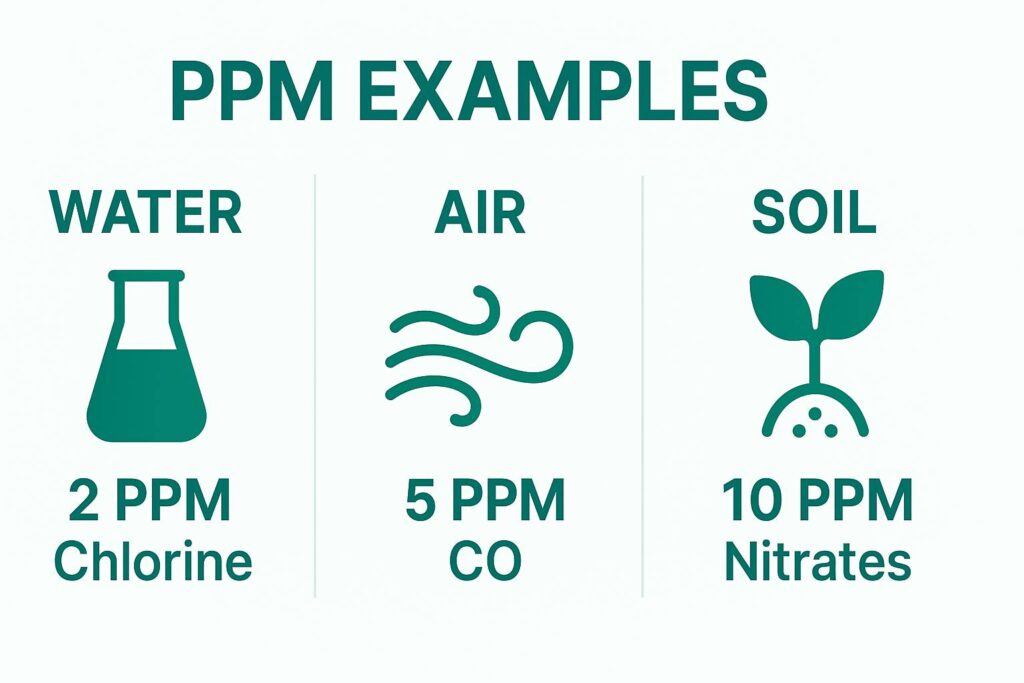
PPM in daily use is more common than people realize. Drinking water, indoor air, swimming pools and food all have PPM levels that determine whether they are clean, safe or properly treated. When a PPM value is too high or too low, we immediately notice changes in taste, comfort, safety and performance.
PPM Examples in Water
PPM in water is widely used to control disinfectant levels, dissolved minerals and pollution.
Example 1
Tap water commonly contains 100 to 300 PPM TDS (Total Dissolved Solids) depending on minerals in the pipeline.
Example 2
Swimming pools maintain 1 to 3 PPM chlorine for sanitization. Too low leads to bacteria, too high causes irritation.
Example 3
Filtered water may contain 10 to 50 PPM minerals after purification, improving taste and safety.
Example 4
If nitrates reach 50 PPM in drinking water, infants are at risk and treatment becomes required.
These water PPM values make sure water remains clean and healthy for use.
PPM Examples in Air Quality
PPM in air measures pollutants and gases that affect comfort and breathing.
Example 1
Indoor CO₂ PPM levels between 400 to 800 are ideal. Above 1200 PPM causes headache and poor focus.
Example 2
A carbon monoxide concentration of 5 PPM can be harmful with prolonged exposure, while 50 PPM is dangerous within hours.
Example 3
Ozone above 0.07 PPM outdoors can irritate the lungs, especially for sensitive groups.
Example 4
Near busy roads, nitrogen dioxide may reach 0.05 PPM, contributing to asthma and respiratory problems.
Monitoring air PPM concentration protects indoor comfort and public health.
PPM Examples in Soil
PPM in soil helps determine nutrients and contaminants affecting plants.
Example 1
10 to 50 PPM nitrates is ideal for crop growth, but 200 PPM can damage roots.
Example 2
3 PPM lead in soil is acceptable, but 100 PPM requires remediation.
Example 3
Iron around 5 to 10 PPM supports healthy leaf color and chlorophyll production.
Example 4
Soil sulfur below 15 PPM may lead to nutrient deficiency.
Soil PPM testing ensures farms grow safe and healthy food.
PPM Examples in Food
Many foods contain PPM nutrients and safe additive limits.
Example 1
Energy drinks contain 200 PPM caffeine on average, depending on the serving size.
Example 2
Fluoride in table salt is regulated to stay below 250 PPM.
Example 3
Trace minerals like iron and zinc appear in food at 1–10 PPM to support nutrition.
Example 4
Preservatives such as sodium benzoate must remain within safe PPM limits for safety and quality.
Food industries depend on PPM accuracy to maintain compliance.
PPM Examples in Industrial Uses
Factories and engineers measure PPM concentration to control materials and emissions.
Example 1
Lubricating oils must contain less than 50 PPM water to avoid machinery damage.
Example 2
Semiconductor manufacturing requires contaminants below 1 PPM, ensuring high performance chips.
Example 3
Manufactured gases must stay under 3 PPM sulfur compounds to prevent corrosion and pollution.
Example 4
Boiler water maintains 0 PPM oxygen to stop rust formation in heating systems.
These precise PPM measurements ensure safety and reliability.
Why PPM Examples Matter
Understanding PPM examples in real-world systems helps show why this small unit is so important. It tells us when substances are present at safe levels and when they rise high enough to cause problems. Accurate PPM testing prevents diseases, improves comfort, protects the environment and ensures consistent product quality.
Summary
PPM examples appear everywhere — in the water we drink, the air we breathe, the soil that grows our food and the products used in industries. Even tiny amounts measured in parts per million can make a big difference in health, safety, and performance. By learning how PPM concentration affects each area of life, people can better understand quality, pollution and environmental care.
FAQ — PPM Examples
What are some common PPM examples in daily life
Common PPM examples appear in the water we drink, the air we breathe and the soil that grows our food. Drinking water contains 100–300 PPM dissolved minerals. Indoor spaces may reach 1000 PPM CO₂ when ventilation is poor. Soil nutrients such as nitrates often appear around 10–50 PPM. These examples show how tiny PPM amounts still matter in health and environment.
Why are PPM values used for small concentrations
PPM values make extremely small concentrations easier to understand. A harmful contaminant can exist at only a few parts per million and still create major health effects. Using PPM measurement allows scientists to identify problems long before the concentration becomes dangerous.
What substances are usually measured in PPM
Many daily substances are measured in PPM concentration, including chlorine in pool water, carbon monoxide in indoor air, nitrate in soil and dissolved solids in drinking water. PPM examples also include metal contamination like lead, or helpful minerals like iron in food and soil.
How does PPM relate to water safety
In water treatment, PPM in water helps control both disinfection and mineral balance. Low chlorine PPM may allow harmful microbes to grow, while high chlorine PPM can cause irritation. Excessive TDS PPM may reduce taste and purity. PPM testing ensures safe drinking water for homes and public supply.
How do PPM levels affect air quality
PPM in air can indicate whether an environment is healthy. If carbon dioxide exceeds 1200 PPM, people may feel tired or uncomfortable. If carbon monoxide reaches 5 PPM, it already requires safety action. Even 0.07 PPM ozone outdoors can irritate the lungs. Air quality PPM values quickly show when ventilation or pollution control is needed.
Why are PPM examples in soil important
Soil PPM nutrient levels determine whether plants grow strong or become deficient. Too little nitrogen or iron slows growth. Too much nitrate can damage roots or cause environmental problems. Soil PPM examples help farmers balance fertilizers and improve food quality.
Can PPM examples vary by location
Yes. PPM values differ depending on water treatment systems, climate, pollution levels and soil composition. City tap water may have higher minerals than mountain water. Traffic-heavy areas may show higher NO₂ PPM in air. Agricultural land may contain increased nitrate PPM in soil. Regular PPM testing helps track these changes.